
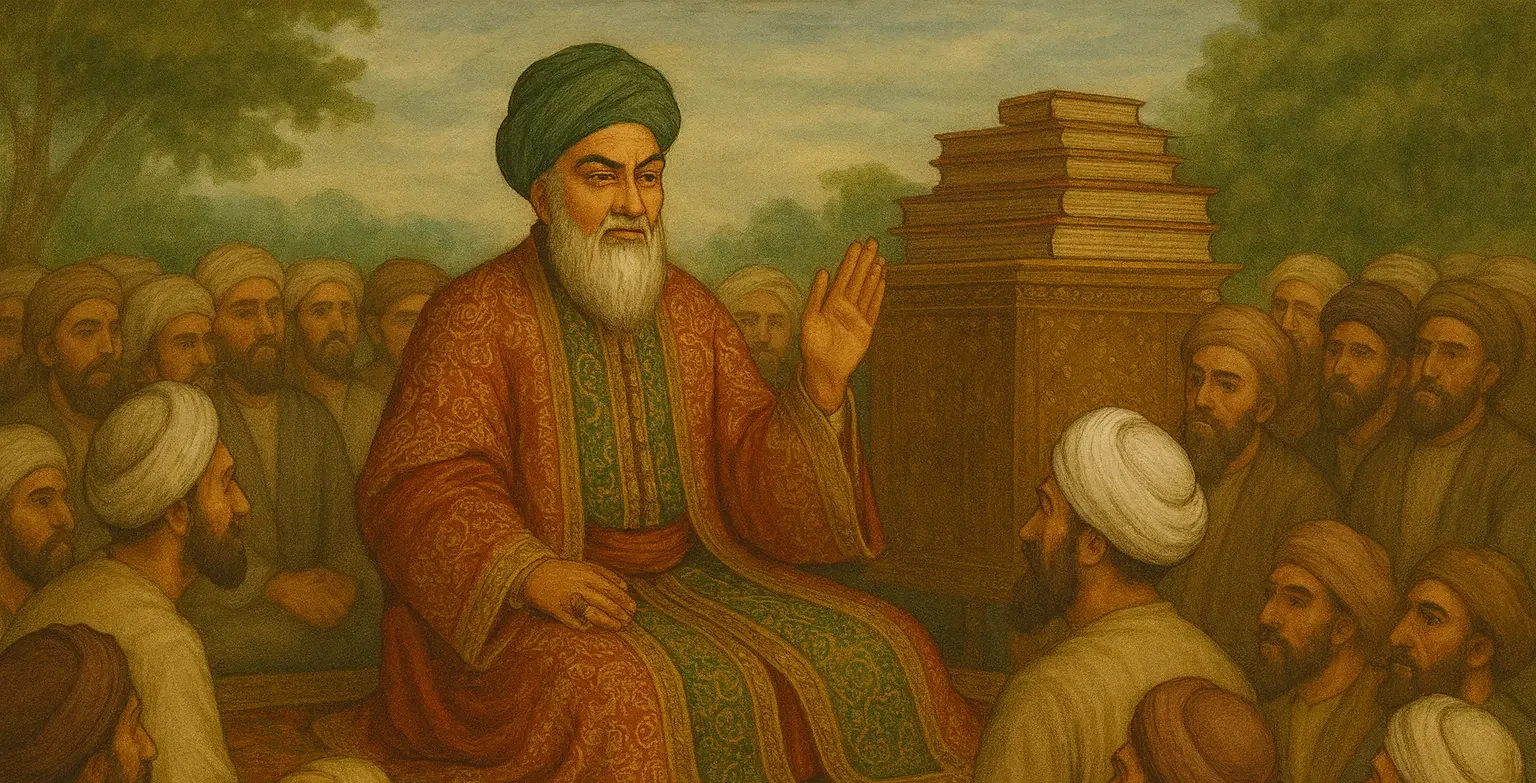
From Jalaluddin to Rumi — Transformation
His name — in childhood — was Mohammad Jalaluddin. Later in life, two things joined his name: “Maulana” on one side and “Rumi” on the other. So together he became Maulana Jalaluddin Rumi.
He was born near a river in Afghanistan (in those days, before partition, it was part of undivided India). His father was a scholar — and those days, “scholar” didn’t mean some British degree-holder. This was long before the British era. His mother, too; in today’s terms, you could say “father PhD, mother MSc” kind of environment. Maybe even “mother PhD” too — that’s the kind of intellectual atmosphere he was born into.
So you can imagine — father with a PhD, mother with MSc or a PhD — the child was born into a world of degrees! Not literally with degrees, but definitely raised surrounded by education. His father made sure he studied deeply. He was taught a lot — so much that you could say he was overflowing with knowledge. His father was a famous scholar, with something like 56,000 followers who used to gather around him.
And you know how it goes — a son always wants to surpass his father. “If you’re ten times greater, I’ll be a hundred!” So while the father had 56,000 followers, the son had 5.6 million followers — metaphorically speaking, of course! There was no Instagram or Facebook back then — I don’t know how people even got followers without them — but he had them, and plenty. Just imagine how huge his ego must’ve been!
Such a giant balloon of ego! Jalaluddin’s pride had become enormous. One day, surrounded by his millions of admirers, he was giving a grand scholarly lecture, and people were hanging onto every word. “Wah! Wah! Wah! Wah!” echoed all around. Each time he spoke, even his cap tilted with pride!
And in the middle of this elite gathering, a fakir (a wandering mystic) arrived — wearing torn clothes, looking completely out of place — like “a patch of coarse cloth on a velvet robe.” (That’s an Urdu phrase.)
The fakir looked at the mountain of books stacked beside Rumi and asked, “What’s all this?”
Rumi replied proudly, “You wouldn’t understand. You can’t comprehend what this is.”
But the fakir was no ordinary man. He picked up all those books, went to the river nearby, and threw them right in!
Imagine! All those precious books — gone into the river. Jalaluddin’s millions of followers rushed to attack the fakir — but before anyone could reach him, he vanished! Disappeared like a lizard darting into a crack. Everyone scattered — only Jalaluddin was left standing, fuming.
Boiling with anger, he shouted, “Take them out! Retrieve my books!”
The fakir calmly said, “Do it yourself. You couldn’t comprehend what I did, just like you couldn’t comprehend what you were reading.”
Poor Jalaluddin! He couldn’t even curse him properly! That’s how refined people were back then, even their anger was polite.
Still, he got to work. Those books had cost him dearly; they were his pride and ego. Maybe a few of his disciples helped him retrieve them from the river. They dried them carefully, cleaned them, and to his shock, the books were perfectly intact! Not even a single word was blurred.
That shook him. He realized something extraordinary had happened.
He found out later that the fakir’s name was Shams-i Tabrizi — quite a difficult name, probably from somewhere far away.
One day, Shams just touched Jalaluddin lightly, and Rumi fainted! He remained unconscious for four days. His parents panicked. His followers, too, millions of them, were deeply worried.
But when he finally woke up, something inside him had changed completely. That giant balloon of ego had shrunk into nothing, and Jalaluddin was no longer the same person. He became a transformed being.
From that moment, he began to follow Shams-i Tabrizi everywhere — like a shadow. But Shams wasn’t easy to please; he would often ignore him. Yet Rumi’s love and longing only grew stronger.
उसका नाम — बचपन में — मोहम्मद जलालुद्दीन था। जीवन के आगे चलकर उसके नाम से दो शब्द जुड़ गए — एक ओर “मौलाना” और दूसरी ओर “रूमी।” इस तरह वह बन गया — मौलाना जलालुद्दीन रूमी।
वह अफ़ग़ानिस्तान की एक नदी के किनारे पैदा हुआ था — (उन दिनों, विभाजन से पहले, वह क्षेत्र अविभाजित भारत का ही हिस्सा था)। उसके पिता एक विद्वान थे — और उन दिनों “विद्वान” का अर्थ किसी ब्रिटिश डिग्रीधारी व्यक्ति से नहीं था। यह तो ब्रिटिश काल से बहुत पहले की बात है। उसकी माँ भी पढ़ी-लिखी थीं — अगर आज की भाषा में कहें तो “पिता पीएच.डी., माँ एम.एससी.” वाला माहौल। शायद माँ भी “पीएच.डी.” हों — इतना बौद्धिक वातावरण था उसके जन्म का।
तो सोचो — पिता पीएच.डी., माँ एम.एससी. या पीएच.डी. — बच्चा पैदा हुआ तो मानो डिग्रियों के संसार में! डिग्रियाँ हाथ में लेकर नहीं, पर शिक्षा के घेरे में पलकर ज़रूर। उसके पिता ने सुनिश्चित किया कि बेटा गहराई से अध्ययन करे। उसे खूब पढ़ाया गया — इतना कि कहा जा सकता है वह ज्ञान से लबालब भर गया था। उसके पिता एक प्रसिद्ध विद्वान थे — उनके लगभग 56,000 अनुयायी उनके चारों ओर जुटते थे।
और जैसा होता है — बेटा हमेशा पिता से आगे निकलना चाहता है। “आप दस गुना महान हैं? तो मैं सौ गुना बनूँगा!” तो जहाँ पिता के 56,000 अनुयायी थे, वहीं बेटे के 5.6 मिलियन — यूँ कहें तो रूपक में। (वो ज़माना था जब न इंस्टाग्राम था, न फेसबुक — न जाने लोग बिना इनके ‘followers’ कैसे पा लेते थे!) लेकिन रूमी के पास थे — और बहुत थे। सोचो, कितना विशाल अहंकार होगा उसमें!
एक बहुत बड़ा अहंकार का गुब्बारा! जलालुद्दीन का गर्व अब आकाश छू चुका था। एक दिन वह अपने लाखों प्रशंसकों के बीच भव्य प्रवचन दे रहा था — चारों ओर लोग मंत्रमुग्ध होकर सुन रहे थे। “वाह! वाह! वाह!” की गूँज चारों ओर थी। हर बार जब वह बोलता, उसका टोपी तक अभिमान से झुक जाती!
इसी विद्वानों की सभा के बीच, एक फ़क़ीर आया — फटे पुराने कपड़ों में, बिल्कुल बेगाना-सा, जैसे किसी मखमली चोगे पर मोटे कपड़े का टुकड़ा।
फ़क़ीर ने उसके पास रखे किताबों के पहाड़ की ओर इशारा करते हुए पूछा,
“ये सब क्या है?”
रूमी ने गर्व से कहा,
“तुम नहीं समझोगे। तुम्हारी समझ के बाहर है ये सब।”
पर वह फ़क़ीर कोई साधारण व्यक्ति नहीं था। उसने उन सारी किताबों को उठाया, पास की नदी की ओर गया — और धप्प! सबको पानी में फेंक दिया!
कल्पना करो — वे कीमती किताबें, वर्षों का अध्ययन — सब नदी में डूब गईं! जलालुद्दीन के अनुयायी फ़क़ीर पर टूट पड़े, लेकिन इससे पहले कि कोई उसे पकड़ पाता — वह ग़ायब हो गया! ऐसे जैसे कोई छिपकली दीवार की दरार में समा जाए।
सब लोग हैरान, बिखर गए — केवल जलालुद्दीन रह गया, गुस्से से लाल।
क्रोध में उसने चिल्लाकर कहा,
“निकालो उन्हें! मेरी किताबें वापस लाओ!”
फ़क़ीर शांत स्वर में बोला,
“खुद ही निकालो। जैसे मैं नहीं समझ सकता तुम्हारी किताबें, वैसे तुम मेरे कृत्य को नहीं समझ सकते।”
बेचारा जलालुद्दीन! वह उसे कोस भी नहीं पाया! इतने संस्कारी लोग थे — उनका क्रोध भी सुसंस्कृत होता था।
फिर उसने खुद मेहनत से किताबें निकालीं — वे किताबें उसकी पहचान थीं, उसका अभिमान, उसका अहंकार। शायद कुछ शिष्य भी उसकी मदद को आए। उन्होंने किताबों को सुखाया, साफ किया — और चमत्कार! किताबें बिल्कुल सुरक्षित थीं — एक भी अक्षर धुँधला नहीं हुआ था!
वह हिल गया। उसे लगा, कुछ असाधारण घटा है। बाद में उसे पता चला कि उस फ़क़ीर का नाम शम्स-ए-तबरेज़ी था —
एक कठिन नाम, शायद बहुत दूर की किसी भूमि से आया हुआ।
एक दिन शम्स ने बस उसे हल्के से छुआ — और रूमी बेहोश हो गया! वह चार दिन तक अचेत रहा। उसके माता-पिता घबरा गए, अनुयायी भी परेशान हो उठे।
लेकिन जब वह होश में आया, तो भीतर कुछ पूरी तरह बदल चुका था। वह अहंकार का विशाल गुब्बारा पिचक गया था, और जलालुद्दीन अब वैसा व्यक्ति नहीं रहा। वह रूपांतरित हो चुका था।
उस दिन से उसने शम्स-ए-तबरेज़ी का अनुसरण शुरू किया — छाया की तरह। पर शम्स भी सहज नहीं थे — वे अक्सर उसे अनदेखा कर देते। लेकिन रूमी का प्रेम और तड़प और भी गहरी होती गई।
🌙 Reflections — After the Story
Love-filled storytelling shows Rumi’s ego as human, and the Guru’s tiny needle bursts “I, me.” प्रेमभरी कथा रूमी के अहंकार को मानवीय दिखाती है; गुरु की नन्हीं सुई से “मैं” का गुब्बारा फूटता है।
“Oh, you tell such a sweet story, with so much love. I’ve been reading Rumi since childhood. No one has ever described Rumi with such love. Such a puffed-up ego of Rumi—others write a bit fearfully, ‘he was a great saint; one cannot write such things about him,’ but you did exactly that.
In this session, whatever happens—whatever thoughts arise in our minds as we attend, and whatever you say—it’s all so intentional. Even the thoughts that come here arrive with intention.
From today’s story, I understood this: the growth of ego always comes with degrees, and whatever worldly accomplishments you have. Some people feel so proud just about being born—‘we are born, and that is our greatest achievement.’ Such people don’t even need degrees.
And to burst that inflated ego, only a tiny needle is needed for that huge balloon. The Guru comes and pricks it lightly with a needle, and it bursts. Then what remains? Only You remain. Only You remain. My ‘I, me’ ends—and that’s what I understood from today’s story, and I know I’ll understand the same from the stories to come.
And tell me one thing—were you feeling cold? Because during Hanuman Chalisa I fell asleep a bit. I had a little cold and cough, and you came in my dream: ‘Auntie, give me a blanket, auntie give me a blanket—I’m shivering badly. It’s very cold.’”
Alif replied, “Yes! When I sat to meditate, I told you, ‘You are beyond body and mind—the Self,’ and truly I felt the Self; the body became completely normal. I wasn’t feeling cold at all, in fact, I felt warm.
So, the thing is, these Jalaluddin Mohammad Jalaluddin, the Sufis, regard him with such respect that perhaps they would wash their tongues ten times before even uttering his name. Whether it’s respect or fear, whatever it is, but the way I’m telling of his birth, he was exactly like that. I haven’t exaggerated anything. There was even more tumult and show in his life.
But when so many people are following you and giving you so much honor, maybe your deeds from past births were so good that you’re receiving so much respect and love. Somewhere inside, it’s there, and because of that, someone appears before you who punctures that ego; you become that (the Self).
What does Sufism mean? To love God. Who is God? You yourself. So sing, dance, do whatever—but feel your soul; that is Sufism. But giving Sufism its stamp for the world was made to be done through Rumi. He isn’t ‘Rumi’ yet, because he hasn’t yet met the rūh (spirit). He’s still revolving around body and mind.”
“अरे, आप कितनी प्यारी कहानी सुनाते हैं, इतने प्रेम से! मैं बचपन से रूमी को पढ़ रही हूँ, लेकिन किसी ने भी रूमी को इतने प्रेम से नहीं बताया। रूमी का इतना फूला हुआ अहंकार — बाकी लोग थोड़ा डर-डर कर लिखते हैं, ‘वो तो महान संत थे; उनके बारे में ऐसा नहीं लिखा जा सकता,’ लेकिन आपने तो वही लिखा।
इस सत्र में जो कुछ भी होता है — जो भी विचार हमारे मन में आते हैं, और जो भी आप कहते हैं — सब बहुत उद्देश्यपूर्ण होता है। यहाँ तक कि जो विचार आते हैं, वे भी किसी न किसी इरादे से आते हैं।
आज की कहानी से मैंने समझा कि अहंकार का बढ़ना हमेशा डिग्रियों और सांसारिक उपलब्धियों के साथ आता है। कुछ लोग तो केवल जन्म लेने पर ही गर्व करते हैं — ‘हम पैदा हुए, यही हमारी सबसे बड़ी उपलब्धि है।’ ऐसे लोगों को तो डिग्रियों की भी ज़रूरत नहीं।
और उस फूले हुए अहंकार के गुब्बारे को फोड़ने के लिए बस एक नन्हीं सुई ही काफी होती है। गुरु आते हैं और धीरे से चुभोते हैं — और बस, गुब्बारा फूट जाता है। फिर क्या बचता है? केवल ‘तुम’। मेरा ‘मैं’ और ‘मेरा’ समाप्त हो जाता है। यही मैंने आज की कहानी से समझा, और मुझे पता है आने वाली कहानियों में भी यही समझ और गहरी होगी।
और बताइए — क्या आपको ठंड लग रही थी? क्योंकि हनुमान चालीसा के दौरान मैं थोड़ी सी सो गई थी। मुझे हल्का जुकाम था, और मैंने सपना देखा कि आप कह रहे हैं — ‘आंटी, कंबल दीजिए, मैं बहुत कांप रही हूँ, बहुत ठंड है।’”
अलिफ़ ने कहा, “हाँ! जब मैं ध्यान में बैठा, तो मैंने खुद से कहा — ‘तुम शरीर और मन से परे हो — आत्मा हो।’ और सच में, मैंने आत्मा को महसूस किया। शरीर एकदम सामान्य हो गया, ठंड बिल्कुल नहीं लगी; उलटे, भीतर गर्माहट थी।
तो बात यह है कि यह जलालुद्दीन मोहम्मद जलालुद्दीन — सूफी लोग उनका इतना सम्मान करते हैं कि शायद नाम लेने से पहले दस बार जीभ धोते होंगे। आदर हो या भय, जो भी हो — लेकिन मैंने जैसा बताया, वे सचमुच वैसे ही थे। मैंने कुछ बढ़ा-चढ़ा कर नहीं कहा। उनके जीवन में और भी ज्यादा दिखावा और हलचल थी।
जब लाखों लोग किसी का अनुसरण करें, उसे आदर दें, तो शायद पिछले जन्म के कर्म इतने अच्छे रहे हों कि उसे इतना सम्मान और प्रेम मिल रहा हो। और तब कोई आता है जो उस अहंकार को फोड़ देता है — और वही जागरण है।
सूफ़ीमत का अर्थ क्या है? — ईश्वर से प्रेम करना। और ईश्वर कौन है? — तुम स्वयं। गाओ, नाचो, जो भी करो — अपनी आत्मा को महसूस करो, वही सूफ़ीमत है। परंतु सूफ़ीमत को संसार में पहचान देने के लिए रूमी को चुना गया। वह अभी ‘रूमी’ नहीं बने, क्योंकि अभी तक उन्होंने ‘रूह’ (आत्मा) को नहीं पाया था; वे अभी भी शरीर और मन के चक्कर में घूम रहे थे।”
Awakening isn’t instant—destiny ripens; the struggle is the teaching. जागरण तुरन्त नहीं—भाग्य पकता है; संघर्ष ही शिक्षा बनता है।
“I didn’t feel like Rumi was made in a day. Our past deeds and life govern the subsequent births. He was born in the marsh of ego, yet when Guru came in his life, things transformed.”
Alif added, “We say it easily—but we only see the tip of the iceberg. Now I will show you the struggle.”
Father added, “Everyone’s journey is unique—because when you are born, you come with your destiny. Your spiritual journey starts and your past prārabdha (destined karma) ends somewhere. In his journey, as you’re telling, the struggle came so that he could show the world how he crossed it.”
Alif explained, “In your own journey, remain in the present and enjoy.”
“मुझे नहीं लगा कि रूमी एक ही दिन में बने। हमारे पिछले कर्म और जीवन अगले जन्मों को निर्धारित करते हैं। वह अहंकार के दलदल में पैदा हुए, लेकिन जब गुरु आए, तो सब बदल गया।”
अलिफ़ ने कहा, “हम यह आसानी से कह देते हैं, पर हम केवल हिमखंड का ऊपरी हिस्सा देखते हैं। अब मैं तुम्हें संघर्ष दिखाऊँगा।”
पिता ने कहा, “हर किसी की यात्रा अलग होती है, क्योंकि जब हम जन्म लेते हैं, तो अपने भाग्य के साथ आते हैं। आध्यात्मिक यात्रा तब शुरू होती है, और पुराना प्रारब्ध कहीं समाप्त होता है। उसकी यात्रा में संघर्ष इसलिए आया ताकि वह संसार को दिखा सके कि उसने उसे कैसे पार किया।”
अलिफ़ ने समझाया, “अपनी यात्रा में वर्तमान में रहो और उसका आनंद लो।”
We are Jalaluddin; the daily prick of awareness lightens our life-burdens. हम ही जलालुद्दीन हैं; रोज़ की जागरूकता की सुई जीवन के बोझ हल्के करती है।
“Whatever expression you described, it all came alive in imagination. Jalaluddin is none other than us. Actually, we are unconscious. ‘I’m so intelligent. When I speak, hundreds of thousands listen.’ That one needle hurts so much when the air rushes out of the balloon. After that, faint comes true wakefulness. To take us on that journey of becoming Rumi, like gathering us lovingly like little children, mischievously jumping—every day you prick us with that little needle.
And whose ego’s balloon it pierces where, and who awakens when, how much—this will be understood on the journey from spirit to Rumi. What I understood was: when that pile of books was thrown into the pond, any burden of life that I am calling a burden—that burden being set aside is purposeful. Now I’ve begun to understand it.”
Alif added, “I enjoyed seeing that scene live. This is exactly what happens. The one you call a lizard, at some point, stands before you and says, ‘Okay, now tell me—are you becoming the lizard yourself? See in your next birth.’”
“जो कुछ भी आपने बताया, वह सब कल्पना में जीवंत हो उठा। जलालुद्दीन कोई और नहीं — हम ही हैं। वास्तव में, हम बेहोश हैं। ‘मैं बहुत बुद्धिमान हूँ; जब मैं बोलती हूँ, तो हज़ारों लोग सुनते हैं।’ वह सुई बहुत चुभती है जब गुब्बारे की हवा निकलती है। उसके बाद बेहोशी के बाद की जागृति आती है। हमें रूमी बनने की यात्रा पर ले जाते हुए, आप रोज़ उसी नन्हीं सुई से चुभोते हैं।
किसका अहंकार कहाँ फूटेगा, कौन कब जागेगा — यह आत्मा से रूमी बनने की यात्रा में ही समझ में आएगा। जब पुस्तकों का ढेर तालाब में फेंका गया, तो मैंने महसूस किया कि मेरे जीवन के बोझ भी उसी तरह हटाए जा रहे हैं — वह हटाना भी सार्थक है। अब मैं समझने लगी हूँ।”
अलिफ़ ने कहा, “वह दृश्य देखना मुझे भी अच्छा लगा। यही तो होता है। जिसे तुम छिपकली कहते हो, वही कभी तुम्हारे सामने खड़ा होकर पूछता है — ‘अब बताओ, क्या तुम खुद छिपकली बन रहे हो?’”
Followers don’t matter—self-knowledge does; the Guru punctures prestige. अनुयायी नहीं, आत्मबोध मायने रखता है; गुरु प्रतिष्ठा के गुब्बारे में सुई लगाते हैं।
“He had 5.6 million followers. We don’t have 5.6 million; we have very few. Yet our balloon is perhaps even bigger, and we live in that same glitter. And I felt Jalaluddin was very fortunate—maybe we are too—that his Guru came. That fakir gave a slap, and he fainted for four days. Our Guru is you, and you are showing us that the burden of our books, our degrees, our followers—none of it matters. Know yourself.”
Alif explained, “When you name someone Mohammad, they say you are calling the Prophet Mohammad again and again. They also added Jalal-ud-Din. Jalali means God Himself—‘Jal tu, Jalal tu…’ Think—such ‘Jalal,’ and with it ‘ud-Din.’ See the limits of ego.”
“उसके 5.6 मिलियन अनुयायी थे। हमारे तो बहुत कम हैं, फिर भी हमारा गुब्बारा शायद उससे भी बड़ा है। और हम भी उसी चमक-दमक में जीते हैं। मुझे लगा, जलालुद्दीन बहुत भाग्यशाली था — शायद हम भी हैं — कि उसके जीवन में गुरु आए। उस फकीर ने एक थप्पड़ मारा और वह चार दिन तक बेहोश रहा। हमारे गुरु आप हैं; आप हमें दिखा रहे हैं कि हमारी किताबें, डिग्रियाँ, अनुयायी — कुछ मायने नहीं रखते। स्वयं को जानो।”
अलिफ़ ने कहा, “जब किसी का नाम मोहम्मद रखा जाता है, तो कहा जाता है कि तुम पैग़ंबर मोहम्मद को बार-बार पुकार रहे हो। उन्होंने ‘जलाल-उद-दीन’ जोड़ा — ‘जलाल’ का अर्थ है ईश्वर की महिमा। सोचो — ऐसा ‘जलाल’, और उसके साथ ‘दीन’! देखो, अहंकार की सीमा।”
Stay grounded and unite with the One within. ज़मीन से जुड़े रहो और भीतर के ‘एक’ से एक हो जाओ।
“So be grounded and be one with the One within you. That’s my takeaway.”
Alif agreed.
“तो ज़मीन से जुड़े रहो और अपने भीतर के ‘एक’ से एक हो जाओ — यही मेरा निष्कर्ष है।”
अलिफ़ ने सहमति जताई।
God is seen when the ‘I’ dies; inner cleansing begins. ‘मैं’ मरता है तो ईश्वर दिखता है; भीतर की सफ़ाई शुरू होती है।
“From today’s story, I understood this: I saw someone’s status today that a person beholds God twice—once when their ‘I’ dies, and once when they themselves die. I’m trying hard, but it isn’t dying. Everything is happening because of the ego. A tug of war continues within.”
Alif asked, “All this happened after going to Vrindavan, right?” The mother nodded yes.
Alif added, “Then, why did you go and take trouble upon yourself?”
Mother laughed and said, “The fakir has come; the saints have come. On all sides, those who break it have arrived with hammers. Radha Rani has come, and that condition will be good—it’s all cleaning out. I understand that my child is with me, who came in the morning and started taking me back into my journey, and my story began to become right again. When the Brahma Muhurta is set right, everything is set right. We will become Rumi from Jalaluddin.”
“आज की कहानी से मैंने समझा कि इंसान दो बार ईश्वर का दर्शन करता है — एक बार जब उसका ‘मैं’ मरता है, और दूसरी बार जब वह स्वयं मरता है। मैं प्रयास कर रही हूँ, पर यह ‘मैं’ मर ही नहीं रहा। सब कुछ अहंकार के कारण हो रहा है। भीतर खींचातानी चल रही है।”
अलिफ़ ने पूछा, “यह सब वृंदावन जाने के बाद हुआ?” — माँ ने ‘हाँ’ कहा।
अलिफ़ ने कहा, “तो फिर क्यों गईं और खुद पर कष्ट लिया?”
माँ हँसकर बोलीं, “फकीर आ गए हैं; साधु-संत हथौड़े लेकर आ गए हैं। राधा रानी भी आ गई हैं। सब ओर सफाई चल रही है। मेरा बच्चा मेरे साथ है, जिसने सुबह आकर मुझे फिर से मेरी यात्रा पर लौटा दिया। जब ब्रह्ममुहूर्त ठीक होता है, तो सब ठीक हो जाता है। हम जलालुद्दीन से रूमी बनेंगे।”
You’ll do right—either by insight or by a few divine slaps. सही काम होगा—या तो समझ से, या कुछ दिव्य थप्पड़ों से।
“From today’s story, what I observed is this: everything—everything you’ve told me so far about spiritual progression and how the journey unfolds—it’s a very comforting feeling that either you understand yourself and do the right thing on your own, or you get four or five slaps and then the right thing happens anyway. What a good world, isn’t it?”
Alif said, “Yes! That everyone helps everyone—because the seated Self within is bringing everyone to the same love. The soul says, ‘Love me.’ Marriage is such a thing that the one who eats it (enters it) repents, and the one who doesn’t eat it repents too—so it feels better to repent after eating. If, in the whole cosmos, someone were to look—Mṛtyuloka (the mortal world) is the best, and within it the householder stage is best in the whole cosmos, because it’s the easiest place to reduce ego and attain God—very good.”
“आज की कहानी से मैंने देखा कि या तो इंसान खुद को समझकर सही करता है, या चार-पाँच थप्पड़ खाकर सही करता है। क्या सुंदर संसार है, है ना?”
अलिफ़ ने कहा, “हाँ! हर कोई हर किसी की मदद करता है, क्योंकि भीतर बैठा आत्मा सबको एक प्रेम की ओर ले जा रहा है। आत्मा कहती है — ‘मुझसे प्रेम करो।’ विवाह — जो करता है, पछताता है; जो नहीं करता, वह भी पछताता है — इसलिए करना बेहतर है और फिर पछताना! पूरे ब्रह्मांड में देखें तो मृत्यु-लोक सर्वोत्तम है, और उसमें गृहस्थ आश्रम सबसे श्रेष्ठ है, क्योंकि वही जगह है जहाँ अहंकार सबसे आसानी से गलता है और ईश्वर की प्राप्ति होती है।”
This isn’t just Rumi’s story—it’s ours; relief comes from his becoming. यह केवल रूमी की नहीं, हमारी कहानी है; उसके रूपांतरण से दिल हल्का होता है।
“I just find your expression amusing. What else should I say—I don’t even feel like hiding my face. In the form of Rumi, you’ve opened everything, and seeing everyone’s faces, I’m happy—this isn’t Rumi’s story; it’s our story you’re telling. But it’s a great relief that he became Rumi from Jalaluddin.”
Alif added, “So right now, as Jalaluddin, we’ve heard our balloon burst. If we see Rabiya Basri’s struggle, that struggle is very serious—no parents and resources since childhood; and on the other end, a millionaire. The struggle of the rich is also there; the struggle of the poor is the same. If you struggle since childhood, you become strong; then nothing can sadden you. And we—raised on butter and cream—when we step out into the world, we fall into depression. So Rumi is the other end and today’s era too.”
“आपकी अभिव्यक्ति बस हँसा देती है। अब क्या कहूँ — चेहरा भी छिपाने का मन नहीं करता। रूमी के रूप में आपने सब कुछ खोल दिया। यह रूमी की नहीं, हमारी कहानी है। और राहत है कि वह जलालुद्दीन से रूमी बन गया।”
अलिफ़ ने कहा, “अभी हम भी जलालुद्दीन हैं — हमारा गुब्बारा फूटा है। राबिया बसरी का संघर्ष गंभीर था — न माता-पिता, न साधन। दूसरी ओर करोड़पति रूमी। अमीर और गरीब, दोनों का संघर्ष एक-सा है। जो बचपन से संघर्ष करता है, वह मज़बूत बनता है; और जो मलाई-मक्खन खाकर बड़ा होता है, दुनिया में कदम रखते ही उदासी में गिर जाता है। रूमी आज के युग का भी प्रतिनिधि है।”
The only fault is incomplete love; ego parades until love completes. कमी बस प्रेम की है; प्रेम पूर्ण होने तक अहंकार का जुलूस चलता रहता है।
“The mistake is only this—that love is not complete. Until it is complete, you will be scolded, and you will keep being scolded.”
Alif explained, “There’s a whole procession of inflated ego.”
“गलती बस इतनी है — प्रेम अधूरा है। जब तक वह पूरा नहीं होता, डाँट पड़ती रहेगी।”
अलिफ़ ने कहा, “पूरा जुलूस है फूले हुए अहंकार का।”
Literacy isn’t wisdom; the fakir teaches love’s education. साक्षरता प्रज्ञा नहीं; फकीर प्रेम की शिक्षा देता है।
“I’m thanking God a lot that I didn’t study a lot. Truly, what comes to my mind is always this: two things—literacy and education. Until there is education along with literacy, this problem will be with everyone. With Rumi—there was more literacy than education; and with the fakir—there was complete education of love.”
Alif applauded.
“मैं ईश्वर का बहुत धन्यवाद करती हूँ कि मैंने ज़्यादा पढ़ाई नहीं की। साक्षरता और शिक्षा — ये दो अलग चीज़ें हैं। जब तक साक्षरता के साथ शिक्षा नहीं होगी, यह समस्या बनी रहेगी। रूमी के पास साक्षरता ज़्यादा थी; फकीर के पास प्रेम की पूर्ण शिक्षा थी।”
अलिफ़ ने ताली बजाई।
When held in the Divine lap, books and pain fade—only a smile remains. ईश्वर की गोद में पहुँचते ही किताबें व पीड़ा धुँधली—बस मुस्कान बचती है।
“Rumi’s were such that in one go all his books were thrown, and he endured it. With us, they are thrown one by one—and I get upset. But when they dry, and become as they were, then it feels good. But at the time when they are thrown into water, it hurts. When one is felt in the lap (of the Divine), then neither the book is remembered nor anything else—only that smile.”
Alif smiled.
“रूमी की सारी किताबें एक साथ फेंकी गईं, और उन्होंने सह लिया। हमारे साथ तो एक-एक करके फेंकी जाती हैं — और हम परेशान हो जाते हैं। लेकिन जब वे सूखकर फिर वैसी ही हो जाती हैं, तो अच्छा लगता है। जब ईश्वर की गोद में अपने को महसूस करते हैं, तो न किताब याद रहती है, न कुछ और — बस वह मुस्कान रहती है।”
अलिफ़ मुस्कराए।
The path is from intelligence to wisdom—for Rumi and for us. राह बुद्धि से प्रज्ञा की है—रूमी के लिए भी, हमारे लिए भी।
“It’s the journey from intelligence to wisdom. That was Rumi’s journey, and it’s our journey too.”
Alif smiled.
“यह बुद्धि से प्रज्ञा की यात्रा है। वही रूमी की यात्रा थी, और वही हमारी भी।”
अलिफ़ मुस्कराए।
Pride of knowledge makes Jalaluddin; knowledge of pride makes a saint. ज्ञान का गर्व जलालुद्दीन बनाता है; गर्व का ज्ञान संत बनाता है।
“From the whole story, one thing became clear: the pride of knowledge and the knowledge of pride. When you have the pride of knowledge, you become Jalaluddin; when you become aware of pride, you become a saint. So now there’s a balloon inside us, and you’re sitting with a needle—constantly pricking—and one day will come when the balloon will burst completely, all ego out.”
“पूरी कहानी से एक बात स्पष्ट हुई — ‘ज्ञान का गर्व’ और ‘गर्व का ज्ञान’। जब तुम्हें ज्ञान का गर्व होता है, तुम जलालुद्दीन होते हो; जब तुम्हें गर्व का ज्ञान होता है, तुम संत बनते हो। अब हमारे भीतर भी गुब्बारे हैं, और आप सुई लेकर बैठे हैं — बार-बार चुभोते हैं, जब तक वह पूरी तरह फूट न जाए।”
Worldly “well-wishers” keep positions; the fakir burns attachments. सांसारिक ‘हितैषी’ पद बचाते हैं; फकीर आसक्तियाँ जलाता है।
“When those 8.4 million disciples were pulling out his books and he himself was trying to retrieve them from the pond, I put myself in his place and saw that those I know or consider my well-wishers—when they help me in owning my worldly positions—I remain under the illusion that they are my true well-wishers, not the fakir. My books are being tossed harshly into the fire. Jalaluddin found them intact.”
Alif added, “No! In the subsequent story, you shall see that his books were dried and burnt as well.”
“जब उसके 8.4 मिलियन शिष्य किताबें निकाल रहे थे, और वह खुद उन्हें तालाब से निकाल रहा था, मैंने खुद को उसकी जगह पर रखा। जो लोग मेरी सांसारिक स्थिति बनाए रखने में मदद करते हैं, मैं उन्हें अपना हितैषी मानती हूँ — फकीर को नहीं। मेरी किताबें भी आग में फेंकी जा रही हैं। जलालुद्दीन की किताबें तो सही-सलामत रहीं।”
अलिफ़ ने कहा, “नहीं! आगे की कहानी में देखोगी — वे किताबें सूखकर बाद में जला दी गईं।”
The journey matters most—enjoy it as the fakir tosses the books. यात्रा ही सर्वोपरि—फकीर किताबें फेंके तब भी आनंद लो।
“I don’t know if the balloon has burst or not. You will tell.”
Alif explained, “The journey is important—the journey. Look—when he was Jalaluddin, he didn’t know he would become (Rumi). How would he know then? He was enjoying the journey. We must enjoy the journey. Whatever is happening is happening—what can we do? In the midst of so many people, one fakir came and threw the whole pile of books away. Tit for tat—the fakir did exactly as he said. The most important part is: Enjoy the journey. What a good world! We choose—either get slapped and come, or come straight. Such a wonderful world—determined to unite us with the Self.”
“मुझे नहीं पता कि गुब्बारा फूटा या नहीं — आप बताइए।”
अलिफ़ ने कहा, “यात्रा ही महत्वपूर्ण है। जब वह जलालुद्दीन था, उसे नहीं पता था कि वह रूमी बनेगा। वह यात्रा का आनंद ले रहा था। हमें भी लेना चाहिए। भीड़ में एक फकीर आया और सारी किताबें फेंक दीं। आँख के बदले आँख — फकीर ने वही किया जो उसने कहा था। सबसे ज़रूरी बात — यात्रा का आनंद लो। कितना सुंदर संसार है! हम चुनते हैं — या तो थप्पड़ खाकर आओ, या सीधे आओ। यह संसार अद्भुत है — जो हमें आत्मा से मिलाने पर तुला है।”
Bursting then swelling—yet one day the balloon surely bursts. फूटना फिर फूलना—पर एक दिन गुब्बारा अवश्य फूटेगा।
“From today’s story, I only understand—bursting, then swelling; bursting, then swelling. But now we’ve understood—it will burst one day, surely it will. It will burst one day.”
Alif asked, “Who has seen the tomorrow?”
Mother replied, “Today—now—it burst. Right now, in front of the Guru.”
Alif explained, “You didn’t understand my words; one day, it will burst, or won’t. Be in the present and enjoy now—eat well, drink, stay merry.”
“आज की कहानी से मैं केवल इतना समझी — फूटना, फिर फूलना; फूटना, फिर फूलना। पर अब समझ आ गया है — एक दिन तो फूटेगा ही, ज़रूर फूटेगा।”
अलिफ़ ने पूछा, “किसने देखा है कल?”
माँ ने कहा, “आज — अभी — गुरु के सामने फूट गया।”
अलिफ़ ने कहा, “तुमने मेरी बात नहीं समझी; एक दिन फूटेगा या नहीं — कौन जानता है? वर्तमान में रहो और आनंद लो — खाओ, पियो, प्रसन्न रहो।”
✨ Essence / सार
“When pride thaws, love begins.”
“जब अहंकार पिघलता है, तभी प्रेम जन्म लेता है।”