
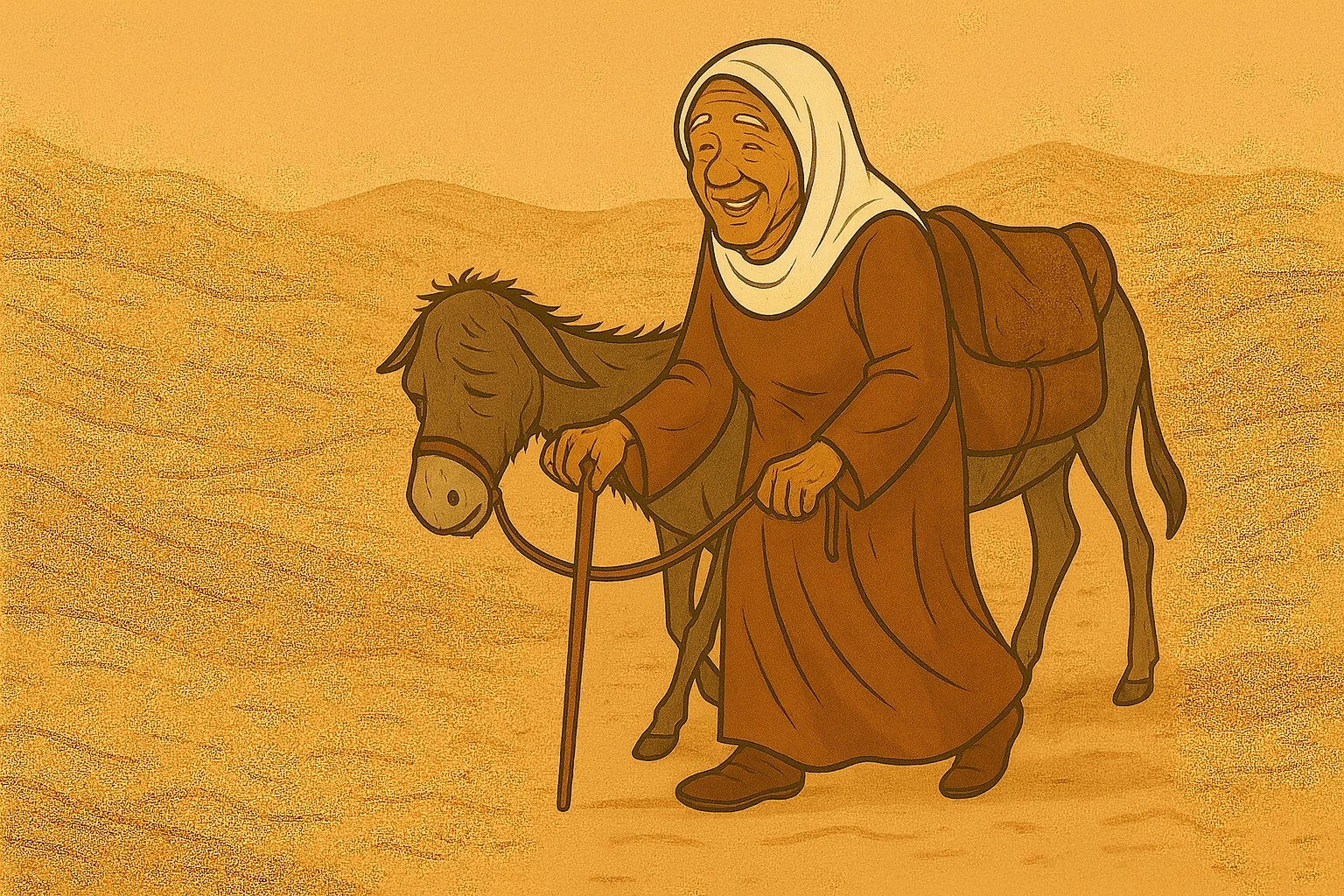
Story
Rabiya grew older. Her followers requested that she accompany them for Hajj. In old times, people walked for five months to reach the site of Hajj. Hasan Basri told Rabiya about the five pillars of Islam. The first is ‘There is no God but Allah and Prophet Mohammed is the messenger’, second ‘Namaz’, third ‘Zakat’, viz charity, fourth is control of senses via practicing Roza, especially during Ramazan, and fifth is pilgrimage after all the responsibilities of a householder are over. Hajj is not a mandatory practice. Life should be like that of an ascetic after the pilgrimage. Rabiya agreed with the people.
All of them started to walk from Basra to Mecca. Out of a helping heart, a devotee gave her a donkey so that she could carry her goods. Others gave her blankets and food items for the journey. Rabiya and the donkey walked slowly, and other people walked past her. The donkey, out of fatigue and old age, died on the journey. Rabiya cremated the donkey’s body, carried the goods on her back, and resumed the journey, though slowly. Hasan Basri, on the other hand, was performing sajdah at every step to the Kaaba.
As Hasan approached the Kaaba, he saw that it was not in its place. Astounded, he asked, “Where is the Kaaba?” A voice from the skies said, “O ignorant man! The Kaaba has gone to welcome a staunch devotee of Allah.” Hasan turned around and saw Rabiya and the Kaaba walking swiftly towards him. Surprised, Hasan asked Rabiya, “What nonsense is this?” Rabiya smiled and said, “Weren’t you playing the drama?” Hasan realised his mistake of being boastful about doing sajdah at every step and performing hollow rituals, without loving God.
Rabiya had no mind; she had a body with a soul. Though she lacked the mind, her body incurred a lot of pain.
राबिया वृद्धावस्था की ओर बढ़ीं। उनके अनुयायियों ने उनसे हज पर साथ चलने का आग्रह किया। पुराने समय में लोग हज के स्थान तक पहुँचने में पाँच महीने पैदल चलते थे। हसन बसरी ने राबिया को इस्लाम के पाँच स्तंभ बताए—पहला: ‘अल्लाह के सिवा कोई ईश्वर नहीं और मुहम्मद उनके रसूल हैं’, दूसरा: नमाज़, तीसरा: ज़कात अर्थात दान, चौथा: रोज़ा रखकर, विशेषकर रमज़ान में, इंद्रियों पर संयम; और पाँचवाँ: गृहस्थ के सभी दायित्व पूर्ण होने के बाद की तीर्थयात्रा। हज अनिवार्य अभ्यास नहीं है; तीर्थ के बाद जीवन संन्यासी जैसा होना चाहिए। राबिया ने लोगों की बात मान ली।
सब लोग बसरा से मक्का की ओर पैदल चल पड़े। सहृदय होकर एक भक्त ने उन्हें सामान ढोने के लिए एक गधा दे दिया। अन्य लोगों ने कंबल और राशन दिए। राबिया और गधा धीरे-धीरे चलते रहे और अन्य लोग आगे निकलते गए। थकावट और बुढ़ापे से गधे की राह में ही मृत्यु हो गई। राबिया ने गधे का दाह संस्कार किया, सामान अपनी पीठ पर उठा लिया और धीरे-धीरे यात्रा जारी रखी। उधर हसन बसरी काबा की ओर जाते हुए हर कदम पर सजदा कर रहे थे।
जैसे ही हसन काबा के पास पहुँचे, उन्होंने देखा कि वह अपनी जगह पर नहीं है। चकित होकर उन्होंने पूछा, “काबा कहाँ है?” आकाशवाणी हुई, “अज्ञानी मनुष्य! काबा अल्लाह की एक परम भक्त का स्वागत करने गया है।” हसन ने पीछे मुड़कर देखा—राबिया और काबा दोनों तेज़ी से उनकी ओर चले आ रहे हैं। विस्मित हसन ने राबिया से पूछा, “यह कैसी बात है?” राबिया मुस्कुराईं, “क्या तुम स्वयं नाटक नहीं कर रहे थे?” तब हसन को अपनी भूल का बोध हुआ—हर कदम पर सजदा कर दिखावा करना और बिना प्रेम के खोखले कर्मकांड निभाना।
राबिया के पास मन नहीं था; केवल देह थी जिसमें आत्मा वास करती थी। मन न होते हुए भी देह को बहुत पीड़ा सहनी पड़ती थी।
🕰️ Feedback 1 — True devotion transcends location — God is everywhere.
True devotion transcends location — God is everywhere.
A mother said, “Many of my family members go for Hajj, but I don’t feel like going. I think ‘Jahan zamee rakh doge, vahin Kaaba sarak ayega.’ (Where I perform the sajdah, the Kaaba is at that site). I understood the difference between childish and child-like behaviour.” Alif explained, “Yes, Childish behaviour involves reluctance and agitation. Child-like behaviour shows complete love. Rabiya, though old, is child-like.”
सच्ची भक्ति स्थान से नहीं, भावना से होती है — ईश्वर सर्वत्र हैं।
एक माँ ने कहा — “मेरे परिवार के कई सदस्य हज पर जाते हैं, लेकिन मुझे जाने की इच्छा नहीं होती। मेरा मानना है — ‘जहाँ ज़मीन रख दोगे, वहीं काबा सरक आएगा।’ (जहाँ मैं सजदा करती हूँ, वहीं काबा उपस्थित है।) मैंने आज समझा कि बालिश्तापन (childishness) और बालसुलभता (child-likeness) में क्या अंतर है।”
अलिफ़ ने समझाया — “हाँ, बालिश्तापन में हठ और बेचैनी होती है, जबकि बालसुलभता में पूर्ण प्रेम होता है। राबिया, वृद्ध होने पर भी, बालसुलभ थीं।”
💛 Feedback 2 — Faith must be lived, not imposed.
Faith must be lived, not imposed.
A mother said, “In this festive season, I was aware of the chanting and was blissful. Though I lost my temper twice, I asked for forgiveness and continued loving God. My studies were messed up, yet I knew I could cover it all. Yesterday, I learned that we should eat the first morsel and offer the second to God. I always did the same, and my family members scolded me for the same. I realized that I was correct, as I could never serve imperfect food to God. From today’s story, I learned that where we bow, the Kaaba comes there.” Alif said, “Yes, it’s our faith. You can’t impose your beliefs on others. Respect the views of others, yet follow the inner call. I never say ‘only you are correct’. I say, ‘You too are correct.’ All paths lead to the same destination.”
आस्था को थोपो मत, जियो।
एक माँ ने कहा — “इस त्यौहार के मौसम में मैं जप के प्रति सजग रही और आनंदित महसूस किया। हालाँकि दो बार मेरा क्रोध भड़क गया, फिर भी मैंने क्षमा माँगी और ईश्वर से प्रेम जारी रखा। मेरी पढ़ाई थोड़ी बिगड़ गई, लेकिन मुझे विश्वास था कि मैं सब संभाल लूँगी।
कल मैंने जाना कि पहला कौर स्वयं खाना चाहिए और दूसरा ईश्वर को अर्पित करना चाहिए। मैं हमेशा ऐसा ही करती थी, लेकिन मेरे परिवार वाले इस बात के लिए मुझे डाँटते थे। अब मुझे समझ आया कि मैं सही थी — क्योंकि मैं ईश्वर को अपूर्ण भोजन नहीं दे सकती थी। आज की कथा से मैंने सीखा कि जहाँ हम झुकते हैं, वहाँ काबा आ जाता है।”
अलिफ़ ने कहा — “हाँ, यह हमारा विश्वास है। पर याद रखो — अपने विचार दूसरों पर थोपो मत। दूसरों के दृष्टिकोण का सम्मान करो, पर अपने अंतरात्मा की पुकार का पालन करो। मैं कभी यह नहीं कहती कि ‘सिर्फ तुम सही हो,’ मैं कहता हूँ — ‘तुम भी सही हो।’ सभी मार्ग एक ही मंज़िल की ओर ले जाते हैं।”
⛓️ Feedback 3 — The Kaaba moved for Rabiya and Guru Nanak — love transcends religion.
The Kaaba moved for Rabiya and Guru Nanak — love transcends religion.
A boy said, “I understood the difference between childish and child-like behaviour. Childish behaviour involves the pretension of conserving the ego. And, Rabiya Basri adopted the five pillars of Islam in love. Though it appeared that she walked all the way to the Kaaba in hardship. Rather, love for Allah drove her. Hence, love is the key.” Alif said, “The Kaaba moved from its resting place twice; once for Rabiya and once for Guru Nanak. One episode may appear delusional, but two episodes reinforce the power of love.”
काबा राबिया और गुरु नानक दोनों के लिए चला — प्रेम धर्म से परे है।
एक लड़के ने कहा — “मैंने बालिश्तापन (childishness) और बालसुलभता (child-likeness) के बीच का अंतर समझ लिया। बालिश्तापन अहंकार को बचाने का दिखावा है। और राबिया बसरी ने इस्लाम के पाँच स्तंभों को प्रेम के साथ अपनाया। भले ही ऐसा प्रतीत होता था कि वह कठिनाई से काबा तक पैदल चलीं, पर वास्तव में अल्लाह के प्रति प्रेम ने उन्हें चलाया। इसलिए, प्रेम ही कुंजी है।”
अलिफ़ ने कहा — “काबा दो बार अपने स्थान से चला था — एक बार राबिया के लिए और दूसरी बार गुरु नानक के लिए। एक घटना भ्रम जैसी लग सकती है, पर दो घटनाएँ प्रेम की शक्ति को प्रमाणित करती हैं।”
🪶 Feedback 4 — Outer pilgrimages mean nothing without inner surrender.
Outer pilgrimages mean nothing without inner surrender.
A father said, “I perceived my mind as the donkey. Under the mental pressure, I go for pilgrimages and bow superficially before the deities. As Rabiya had no belongings, only her acquaintance gave her. Similarly, we own nothing, yet we prefer to load our donkey with mental baggage. As the donkey died, our minds shall suffer with passions.” Alif added, “Yes! People go for pilgrimages at high altitudes, like Kedarnath. And, amidst the crowd, they receive beatings. If you won’t find God in our hearts, God beats us similarly.”
बाहरी तीर्थ यात्रा व्यर्थ है यदि भीतर समर्पण न हो।
एक पिता ने कहा — “मैंने अपने मन को गधे के समान अनुभव किया। मानसिक दबावों के कारण मैं तीर्थों पर जाता हूँ और देवताओं के आगे केवल ऊपरी रूप से झुकता हूँ। राबिया के पास कुछ भी नहीं था — जो मिला, परिचितों से मिला। उसी प्रकार हमारे पास भी वास्तव में कुछ नहीं है, फिर भी हम अपने गधे (मन) पर मानसिक बोझ लादे रहते हैं। और जब वह गधा मर जाता है, तो हमारा मन भी वासना और पीड़ा से तड़पता है।”
अलिफ़ ने जोड़ा — “हाँ! लोग ऊँचे तीर्थों पर जाते हैं, जैसे केदारनाथ, और भीड़ के बीच धक्के और मार खाते हैं। यदि हम ईश्वर को अपने हृदय में नहीं पाते, तो ईश्वर हमें भी उसी प्रकार झकझोरता है।”
🧡 Feedback 5 — Rabiya’s faith explains what outward causes cannot.
Rabiya’s faith explains what outward causes cannot.
A mother said, “I learned that the donkey died….” Alif interrupted and said, “Why did the Kaaba move?” Mother said, “Because the donkey died.” Alif said, “Do I need to kill the donkey to make the Kaaba move?” Mother said, “I think when the Kaaba shall move for me, I may tell the reason.” Alif explained, “Rabiya’s faith did it all….”
राबिया का अडिग विश्वास उन घटनाओं की सच्ची व्याख्या देता है।
माँ ने कहा — “मैंने जाना कि गधा मर गया…।” अलिफ़ ने बीच में टोक दिया — “काबा क्यों हिला?” माँ बोली — “क्योंकि गधा मर गया।” अलिफ़ ने कहा — “क्या काबा हिलाने के लिए मुझे गधे को मारना पड़ेगा?” माँ ने कहा — “मुझे लगता है जब काबा मेरे लिए हिलेगा, मैं कारण बता दूँगी।” अलिफ़ ने समझाया — “सब कुछ राबिया के विश्वास ने कर दिखाया….”
💔 Feedback 6 — Faith moves both the living and the inert.
Faith moves both the living and the inert.
A mother said, “After coming to my in-laws’ place in this festive week, I missed my disciplined routine of waking up at 3.30am, and loving you earnestly. Out of guilt, I was thinking about the same thing since morning. And this story mended my ways of not being tied to gross precepts of living. Even the most disciplined spiritual practice can bring ego. But, once I love you and care for you, I become aware of the lurking ego.” Alif said, “….. Rabiya was slowed by age and climate. The primordial energy is fueling the penta-elemental congregation. It can move the gross non-living as well. Faith saved Meera from Rana, Prahlad from Hiranyakashyapu, and moved the Kaaba for Nanak. Both Nanak and Rabiya had no physical guru, but had faith in the formless. The formless energy guided them.”
विश्वास जड़ और चेतन दोनों को गति देता है।
एक माँ ने कहा — “इस त्यौहार के सप्ताह में जब मैं ससुराल आई, तो मेरा सुबह 3:30 बजे उठने और तुम्हें प्रेमपूर्वक याद करने का अनुशासित क्रम टूट गया। इस बात का पछतावा मुझे सुबह से सताता रहा। और आज की कथा ने मुझे यह सिखाया कि जीवन के स्थूल अनुशासन या नियमों में बंधना आवश्यक नहीं। कभी-कभी अत्यधिक अनुशासन भी अहंकार उत्पन्न करता है। पर जब मैं तुमसे प्रेम करती हूँ और तुम्हारी देखभाल करती हूँ, तो मैं उस छिपे हुए अहंकार के प्रति जागरूक हो जाती हूँ।”
अलिफ़ ने कहा — “….. राबिया उम्र और मौसम के कारण धीमी हो गई थीं। फिर भी मूल ऊर्जा पंचमहाभूतों को चलाती है; वही शक्ति जड़ पदार्थों को भी गति दे सकती है। विश्वास ने मीरा को राणा से, प्रह्लाद को हिरण्यकशिपु से बचाया, और वही विश्वास गुरु नानक के लिए काबा को भी चला गया। नानक और राबिया — दोनों का कोई शारीरिक गुरु नहीं था, परंतु उनका विश्वास निराकार में था। निराकार ऊर्जा ने ही उनका मार्गदर्शन किया।”
🛠️ Feedback 7 — Travel light — don’t load “donkeys” with your baggage.
Travel light — don’t load “donkeys” with your baggage.
A mother said, “You said that Rabiya had no personal belongings. Similarly, we own nothing. Yet, we receive the bounties from God in this world—family, qualifications, clothes, jewelry, and the rest—and consider them ours. Then, we look for donkeys, i.e., kins and acquaintances, for loading the bounties. I wondered if anyone would offer oblations to the Linga at my house once I die, as my son has refused to do rituals after my demise. I learned not to load the donkeys with my garbage. And I was keen about the question of why the Kaaba moved. In a humorous talk, a drunkard asked a wrestler, ‘How many liters of milk do you consume in a day?’ The wrestler boasted, ‘I drink gallons of milk daily.’ The drunkard asked, ‘Can you make the sturdy wall move with your punch?’ He denied, tried with all his might, and failed. With a glass of alcohol, the drunkard said, ‘Take this drink instead of gallons of milk.’ The wrestler drank. ‘Isn’t the wall moving now?’ The wrestler nodded yes. (All laughed.) I learned:
Jitna saaman kam rahega, utna safar aasan rahega.
Jitni bhaari gathari hogi, utna tu hairaan rahega.
Usase milna namumkin hai, jab tak khud ka dhyaan rahega.
Jab haath mile, dill na mile, aise mein nuksaan rahega.
Jab tak mandir masjid honge, mushkil mein insaan rahega.
Jab tak tu bhed karega, jokhim mein yeh jaan rahegi.
Alif smiled.
हल्का सफर — अपने “गधों” पर बोझ न लादो।
एक माँ ने कहा — “आपने कहा था कि राबिया के पास कोई निजी वस्तु नहीं थी। उसी प्रकार हमारे पास भी वास्तव में कुछ अपना नहीं है, फिर भी हम ईश्वर से प्राप्त उपहारों — जैसे परिवार, योग्यता, वस्त्र, आभूषण आदि — को अपना मान लेते हैं, और फिर हम उन उपहारों को गधों (अर्थात् रिश्तेदारों और परिचितों) पर लादने लगते हैं।
मैं सोच रही थी कि मेरे मरने के बाद मेरे घर में कोई शिवलिंग पर अर्पण करेगा या नहीं, क्योंकि मेरे पुत्र ने कहा है कि वह मेरे निधन के बाद कोई अनुष्ठान नहीं करेगा। अब मैंने सीखा कि अपने गधों पर अपने कचरे का बोझ नहीं डालना चाहिए। और मैं यह भी जानना चाहती थी कि काबा क्यों चला।
एक हास्यप्रद वार्तालाप में, एक मदहोश व्यक्ति ने एक पहलवान से पूछा, “तुम दिन में कितने लीटर दूध पीते हो?” पहलवान ने गर्व से कहा, “मैं तो रोज़ गैलन भर दूध पीता हूँ।” मदहोश व्यक्ति ने हँसते हुए कहा, “तो क्या तुम अपनी मुट्ठी से इस मज़बूत दीवार को हिला सकते हो?” पहलवान ने इंकार किया, फिर भी पूरी ताकत लगाकर कोशिश की, पर असफल रहा। तब मदहोश व्यक्ति ने कहा, “तो अब यह पेय पी लो, दूध की जगह यही लो।” पहलवान ने शराब पी ली। मदहोश व्यक्ति ने पूछा, “अब क्या दीवार हिल रही है?” पहलवान ने सिर हिलाकर कहा, “हाँ।” (सभी ज़ोर से हँस पड़े।)
जितना सामान कम रहेगा, उतना सफ़र आसान रहेगा।
जितनी भारी गठरी होगी, उतना तू हैरान रहेगा।
उससे मिलना नामुमकिन है, जब तक खुद का ध्यान रहेगा।
जब हाथ मिले, दिल न मिले, ऐसे में नुकसान रहेगा।
जब तक मंदिर-मस्जिद होंगे, मुश्किल में इंसान रहेगा।
जब तक तू भेद करेगा, जोखिम में यह जान रहेगी।
अलिफ़ मुस्कुराईं।
👶 Feedback 8 — Pause, recall the teaching, and distress dissolves.
Pause, recall the teaching, and distress dissolves.
A mother said, “When you asked the reason behind the displacement of the Kaaba, I felt that the formlessness condensed itself as love in Rabiya. And, the ever-floating formless energy moved itself to greet the epitome of love. From the story, I learned that during spiritual practice, the saadhak may be egoistic about his discipline. Yet, if hopelessness clouds the mind and surrender seems impossible, I should take a pause and recollect the teachings for a millisecond; soon, the magnitude of distress minimizes significantly.” Alif appreciated.
क्षणभर रुककर उपदेशों को स्मरण करो — कष्ट घट जाएगा।
एक माँ ने कहा — “जब आपने पूछा कि काबा के हिलने का कारण क्या था, तो मुझे लगा कि निराकार ने स्वयं को प्रेम के रूप में राबिया में साकार किया। और वह सदैव गतिशील, निराकार ऊर्जा प्रेम की मूर्ति का अभिवादन करने स्वयं चली आई।
इस कथा से मैंने सीखा कि साधना के दौरान साधक अपने अनुशासन पर अहंकार कर सकता है। परंतु जब निराशा मन पर छा जाए और समर्पण असंभव लगे, तब मुझे बस एक क्षण के लिए ठहरकर उपदेशों को याद करना चाहिए; ऐसा करने से कष्ट की तीव्रता तुरंत कम हो जाती है।”
अलिफ़ ने उसकी बात की प्रशंसा की।
🦁 Feedback 9 — Rabiya and Hasan: love pauses, mind rushes.
Rabiya and Hasan symbolize love and mind within us. The mind rushes; love pauses to feel the Divine.
A mother said, “Both Rabiya and Hasan are inside me, going on a pilgrimage. Hasan, being swifter, rushes for the destination, forgetting Rabiya. The mind indulges in random rituals, forgetting to pause to feel the energy. As Rabiya calls the Kaaba from within, I remember to pause and re-surrender. Then, Hasan has to pause. It was a story of inner practice.” Alif applauded.
राबिया और हसन हमारे भीतर प्रेम और मन का प्रतीक हैं। मन दौड़ता है, प्रेम ठहरकर ईश्वर को महसूस करता है।
एक माँ ने कहा — “राबिया और हसन — दोनों मेरे भीतर हैं, तीर्थ यात्रा पर निकले हुए। हसन तेज़ी से आगे बढ़ता है, मंज़िल तक पहुँचने की जल्दी में राबिया को भूल जाता है। मन भी इसी तरह बेतरतीब कर्मकांडों में उलझ जाता है, और ऊर्जा को महसूस करने के लिए ठहरना भूल जाता है। जब राबिया भीतर से काबा को बुलाती है, तो मैं ठहरने और फिर से समर्पित होने को याद करती हूँ। तब हसन (मन) को भी रुकना पड़ता है। यह भीतर की साधना की कहानी थी।”
अलिफ़ ने प्रशंसा की।
🎈 Feedback 10 — Humility is essential for self-realization.
Humility is essential for self-realization.
A mother said, “Child-like attitude brings humility, an entailing virtue for self-realization.” Alif nodded yes.
विनम्रता आत्मबोध की आधारशिला है।
एक माँ ने कहा — “बालसुलभ दृष्टिकोण विनम्रता लाता है, जो आत्मबोध के लिए आवश्यक गुण है।” अलिफ़ ने सहमति में सिर हिलाया।
🧘♀️ Feedback 11 — Inner communication dissolves outer conflict.
Inner communication dissolves outer conflict.
A mother said, “In the past fifteen days of Deepawali, though I was irritable due to the lurking Hasan in my heart, yet I was happy for not losing continuous contemplation. I could accept the situation easily. But, it’s hard to beat the lurking Hasan-attitude.” Alif explained, “The three flowers—forget the past and come to the present, forgive yourself and others, be grateful—are the keys. As you pause, offer the flowers. If you are tolerant, it means there is dualism. The inner conscience is forgiving the inner conscience, thanking the inner conscience. Once the inner communication begins, outer circumstances appear futile. This is Sahajawastha. Righteousness in conduct is important; then inner changes follow. At least you didn’t react externally.” Mother said, “No! I did. Hence, I was upset. Irrespective, I apologized, but the other person didn’t respond.” Alif said, “It was due to debts. Bow humbly, without expectations. Hence, I say a householder’s life is the best. Interact with society and keep the mind on God. Escaping society shows cowardice.”
अंतर संवाद बाहरी संघर्ष को समाप्त करता है।
एक माँ ने कहा — “दीपावली के इन पंद्रह दिनों में, हालाँकि मेरे भीतर छिपे हसन (मन) के कारण मैं चिड़चिड़ी रही, फिर भी मुझे खुशी थी कि मेरा सतत चिंतन नहीं टूटा। मैं परिस्थितियों को सहजता से स्वीकार कर पाई, परंतु उस छिपे हुए हसन-जैसे व्यवहार को हराना कठिन है।”
अलिफ़ ने समझाया — “तीन पुष्प— भूत को भूलकर वर्तमान में आना, स्वयं और दूसरों को क्षमा करना, और कृतज्ञ रहना — ये तीनों ही कुंजियाँ हैं। जब तुम ठहरो, तो इन पुष्पों को अर्पित करो। यदि तुम सहनशील हो, तो इसका अर्थ है कि द्वैत अब भी है। भीतर की चेतना ही भीतर की चेतना को क्षमा करती है, और उसी को धन्यवाद देती है। जब यह अंतर्मन का संवाद शुरू होता है, तो बाहरी परिस्थितियाँ व्यर्थ लगने लगती हैं — यही सहजावस्था है। व्यवहार-कुशलता आवश्यक है; तभी भीतर परिवर्तन आता है। कम से कम तुमने बाहरी रूप से प्रतिक्रिया नहीं दी।”
माँ — “नहीं! मैंने दी थी। इसलिए मैं व्यथित थी। फिर भी मैंने क्षमा माँगी, पर सामने वाले ने कोई उत्तर नहीं दिया।”
अलिफ़ — “वह पूर्व ऋणों (karmic debts) के कारण था। बिना अपेक्षा के विनम्रता से झुको। इसीलिए मैं कहती हूँ कि गृहस्थ जीवन सर्वोत्तम है। समाज के साथ रहो और मन को ईश्वर में लगाओ। समाज से भागना कायरता है।”
🌺 Feedback 12 — Obedience to the Guru is true discipleship.
Obedience to the Guru is true discipleship.
A mother said, “I should be child-like, regardless of my chronological age… From Rabiya’s story, I felt that she had no desire to unite with the Kaaba. Journey begins when desires end.” Alif interrupted, “Being free of desires is the destination. Chaah miti, chinta miti, mann re beparvaah… vah hai Shahon ka Shah Sahanshah. Being child-like means being unaware of the physical needs and dependent on the Eternal Mother. Let me tell you a story…” (Guru and disciple kitchen story) “…This means obedience to the Guru is the way.”
गुरु के वचनों का पालन ही सच्चा शिष्यत्व है।
एक माँ — “मुझे बालसुलभ रहना चाहिए… राबिया की कथा से लगा कि उनके भीतर काबा से मिलन की कोई इच्छा नहीं थी। यात्रा तब शुरू होती है, जब इच्छाएँ समाप्त होती हैं।”
अलिफ़ — “इच्छाओं से मुक्त होना ही मंज़िल है — ‘चाह मिटि, चिंता मिटि…’। बालसुलभ होना यानी देह-आवश्यकताओं से अनजान रहकर अनंत माँ पर निर्भर होना। मैं तुम्हें एक कहानी सुनाती हूँ…” (गुरु-शिष्य रसोई कथा) “…अर्थात गुरु के वचन का पालन ही सच्चा मार्ग है।”
🌍 Feedback 13 — Charity is the central pillar that sustains all virtues.
Charity is the central pillar that sustains all virtues.
A father said, “I think I should follow at least one of the pillars of Islam.” Alif added, “Yes! The one path you can practice is charity. It’s the main pillar that supports others. You may believe in different forms, or pray differently. You may conquer your senses by various means. Hajj means to dip in the soul once the responsibilities are over. Hence, charity is the main pillar.”
दान सभी सद्गुणों को सहारा देने वाला मुख्य स्तंभ है।
एक पिता — “मुझे लगता है कि मुझे इस्लाम के पाँच स्तंभों में से कम-से-कम एक का पालन करना चाहिए।”
अलिफ़ — “हाँ! जिस मार्ग का तुम अभ्यास कर सकते हो, वह है दान। यही वह मुख्य स्तंभ है जो बाकी सबको सहारा देता है… हज का आशय है — दायित्व पूरे होने पर आत्मा में डुबकी लगाना। इसलिए दान ही सबसे प्रमुख स्तंभ है।”
🪞 Feedback 14 — The mind’s love seeks outside; the soul’s love transforms within.
The mind’s love seeks outside; the soul’s love transforms within.
A mother said, “Love is the key to attain God.” Alif explained, “Act under the influence of the soul’s love, not the mind’s love. The mind’s love seeks fulfillment outside, while the soul’s love transforms you from within. My close acquaintance met a tragic accident, became crippled, then practiced Yoga with me and became a teacher-training professional. In hard times, she asked how to accept her state though she knew the theory. I consoled her that I was with her. She smiled—she needed that support. This shows that no religion can elucidate the power of love.”
मन का प्रेम बाहरी खोज है, आत्मा का प्रेम आंतरिक रूपांतरण।
एक माँ — “ईश्वर को प्राप्त करने की कुंजी प्रेम है।”
अलिफ़ — “मन के प्रेम से नहीं, आत्मा के प्रेम से कार्य करो। मन का प्रेम बाहर पूर्णता खोजता है, जबकि आत्मा का प्रेम भीतर से रूपांतरित कर देता है। मेरी एक निकट परिचिता दुर्घटना में विकलांग हुईं; मेरे साथ योगाभ्यास कर शिक्षक-प्रशिक्षण प्रोफेशनल बनीं। कठिन समय में उन्होंने पूछा—‘मैं अपने हालात को कैसे स्वीकार करूँ?’ सिद्धांत जानती थीं, फिर भी मन अशांत था। मैंने सांत्वना दी—‘मैं तुम्हारे साथ हूँ।’ वह मुस्कुराईं—उन्हें यही सहारा चाहिए था। इससे स्पष्ट है कि किसी भी धर्म से बढ़कर, प्रेम की शक्ति सर्वोपरि है।”